What watch size fits my wrist? The complete guide
Case diameter, lug-to-lug, thickness: how to pick the right watch size for your wrist, with a sizing chart and a simple way to measure at home.
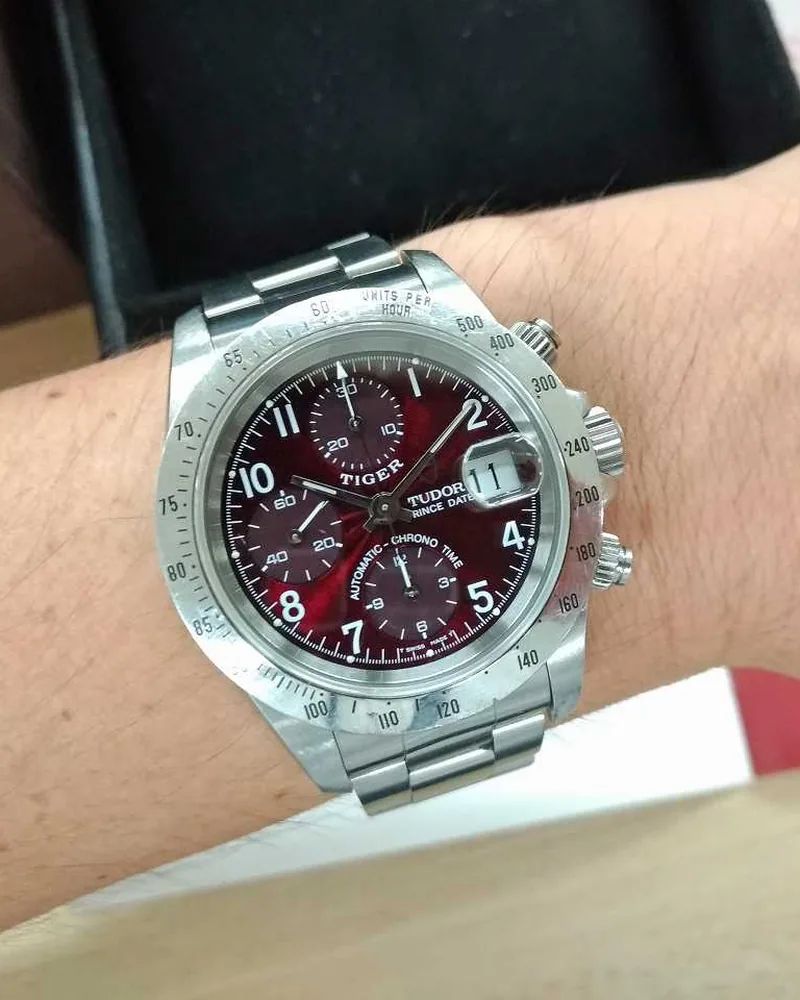
A watch can look stunning in photos and wrong the moment it’s on your wrist. Too big and it overhangs and slides around; too small and it disappears. The good news: the right size isn’t guesswork. You can measure it. Here’s the method, the reference points and the traps to avoid.
Start by measuring your wrist
Two measurements matter, and most people forget the second one.
Wrist circumference. Wrap a soft tape measure just above your wrist bone, where you wear your watch. No tape? A strip of paper marked with a pen, then laid against a ruler, works just as well.
The width of the top of your wrist. Lay a ruler across your wrist and measure the flat part from edge to edge. That’s the surface the watch actually sits on, and it decides whether a watch fits or overhangs.
The number that really matters: lug-to-lug
Everyone looks at case diameter. But it’s the lug-to-lug distance, from the tip of one lug to the tip of the other, that makes or breaks the fit.
The rule is simple: lug-to-lug should not exceed the width of the top of your wrist. If the lugs hang over the edge, the strap floats in mid-air and the watch looks too big, whatever its diameter.
That’s why a 40 mm watch with short lugs can wear better than a 38 mm watch with long ones. Good spec sheets list lug-to-lug; if not, forums and review videos usually mention it.
Sizing chart by wrist circumference
These ranges are starting points for a classic watch (round case, thin bezel). They don’t replace trying one on.
| Wrist circumference | Suggested diameter | Suggested lug-to-lug |
|---|---|---|
| Under 6 in (15 cm) | 34–37 mm | up to 42 mm |
| 6–6.5 in (15–16.5 cm) | 36–39 mm | up to 46 mm |
| 6.5–7 in (16.5–18 cm) | 38–42 mm | up to 49 mm |
| 7–7.7 in (18–19.5 cm) | 40–44 mm | up to 52 mm |
| Over 7.7 in (19.5 cm) | 42 mm and up | over 52 mm |
What changes how big a watch looks
Two watches with the same diameter can wear very differently. A few things matter a lot:
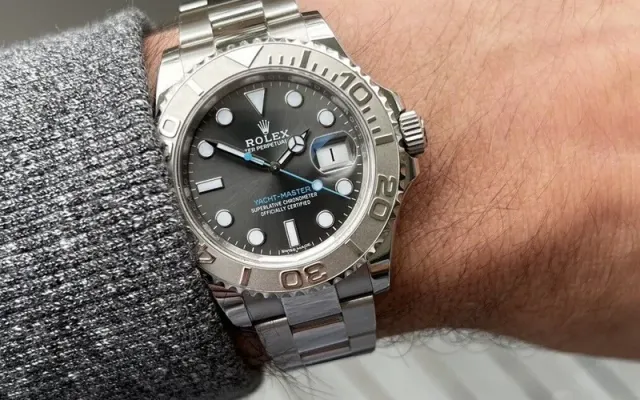
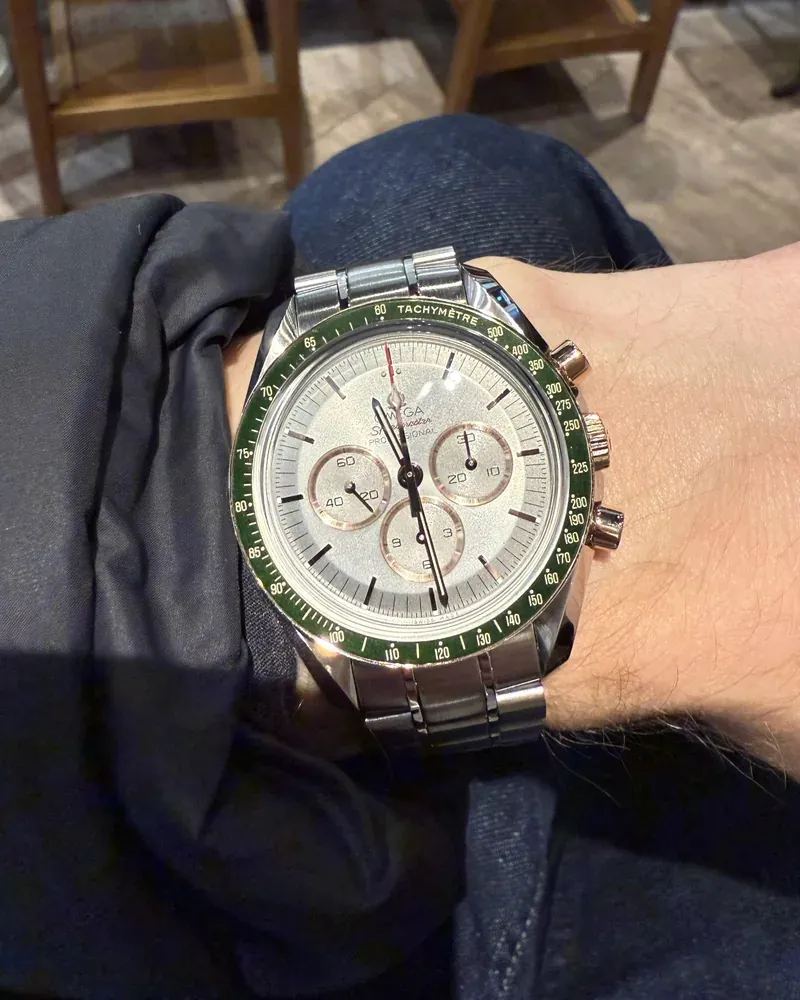
- The bezel. A dive or tachymeter bezel shrinks the dial, so the watch looks smaller. A thin bezel gives all the space to the dial, so it looks bigger.
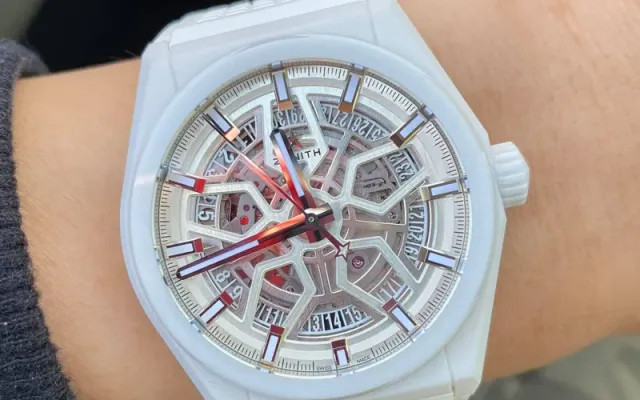
- Dial colour. Light dials (white, silver, cream) look larger; black or navy dials look tighter.
- Thickness. Above roughly 13–14 mm, a watch catches on cuffs and looks chunky even at a sensible diameter.
- Case shape. A cushion or square case takes up more room than a round case of the same diameter.
- Strap or bracelet. A steel bracelet adds visual weight; a slim leather strap or a NATO lightens the whole thing.
Trends and personal taste
Watches grew through the 2000s, then came back to more restrained sizes: many recent releases sit between 36 and 40 mm. You don’t have to follow the trend. Some people want a watch that gets noticed, others one that slips under a cuff. The guidelines above are there to avoid an unbalanced look, not to dictate a style.
The best test: compare on wrists like yours
Official photos are shot on unknown wrists, often with lenses that distort proportions. The most reliable check is to see the watch on a wrist the same size as yours.
That’s exactly what the Arcora wrist gallery is for: every photo shows the owner’s wrist size, and you can filter by brand and by wrist size. Before you buy, you see how the watch really wears.
In short
- Measure your wrist circumference and the width of the top of your wrist.
- Check that lug-to-lug doesn’t exceed that width.
- Use the chart as a starting point, then factor in bezel, dial and thickness.
- Look at photos on wrists your size before you decide.